The fastest ocean liner ever built, and quietly designed so the Navy could turn her into a troopship for a war that never came. She carried presidents and a million passengers, waited more than half a century for a second life, and on Veterans Day 2026 began her last mission: becoming the largest artificial reef in the world.
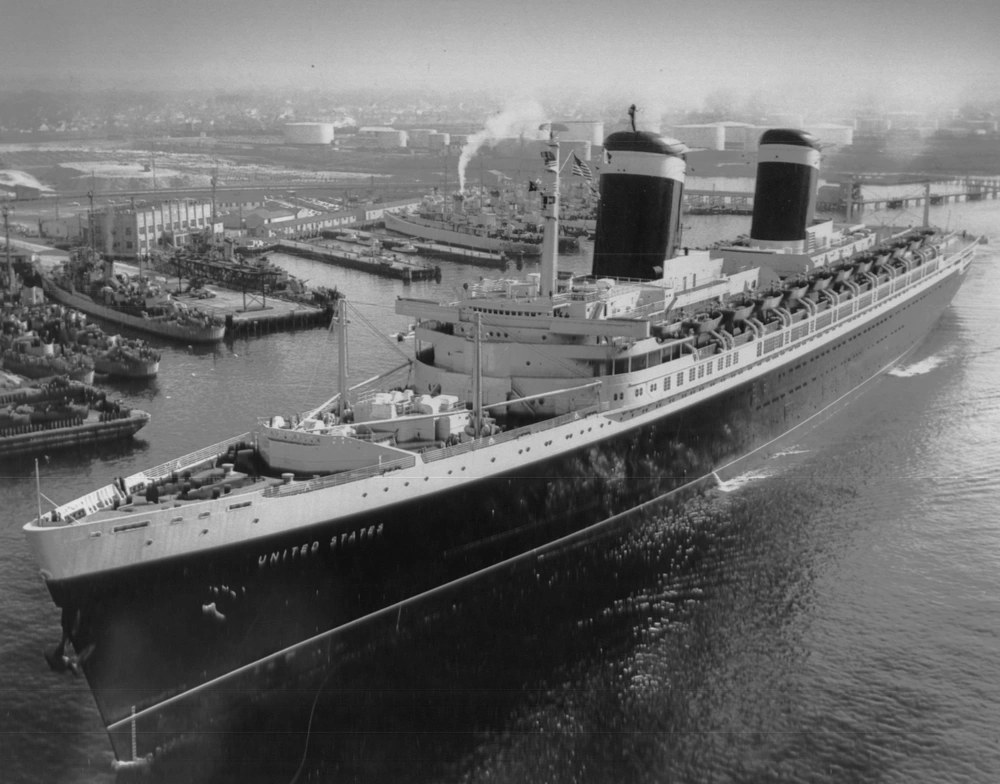
The SS United States was the life’s work of William Francis Gibbs, a self-taught American naval architect who had dreamed since boyhood of building the greatest ship on the Atlantic. In the early Cold War his dream lined up with a military need. If the Soviet Union ever moved on Western Europe, the Pentagon wanted a way to carry large numbers of troops across the ocean fast. The federal government paid about two-thirds of her roughly $78 million cost in exchange for the right to take her over in a national emergency, and United States Lines paid the rest.
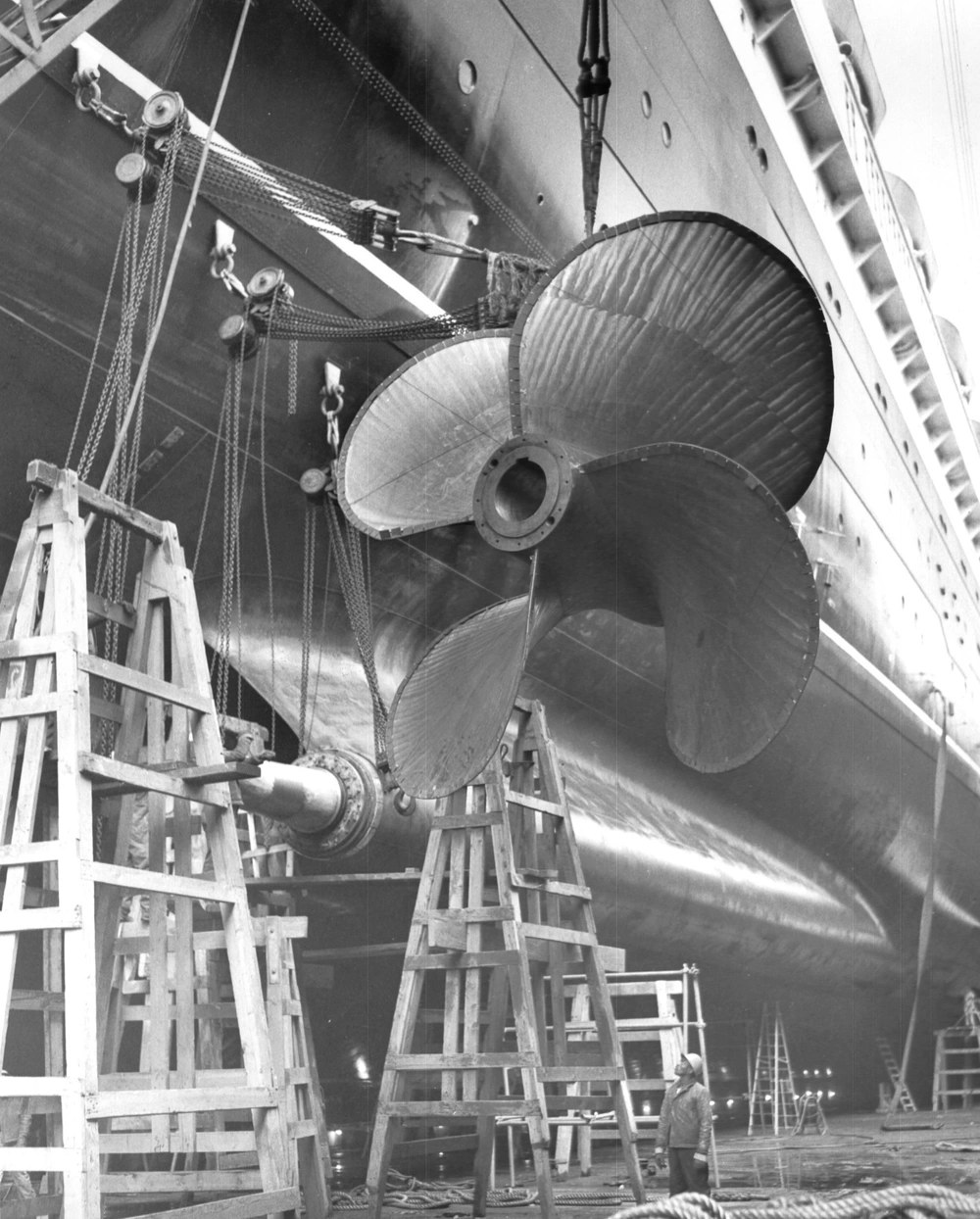
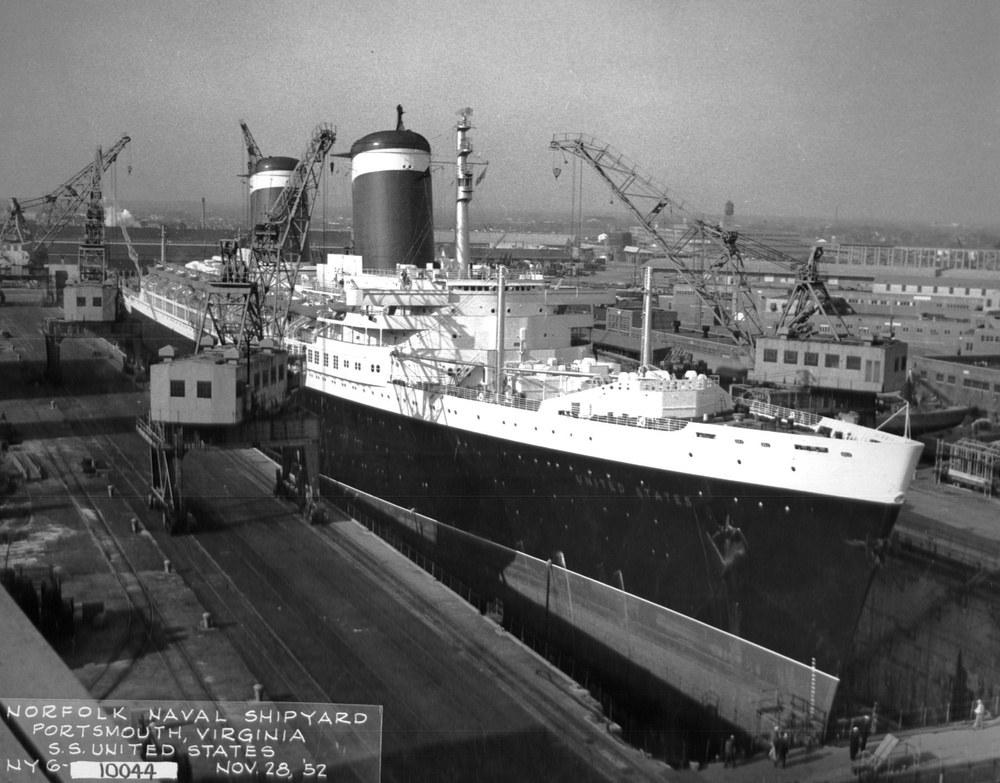
The Navy helped shape the design, and she was built like a warship hidden inside an ocean liner. She had extra watertight compartments to survive a torpedo hit, a fuel range beyond any civilian ship, a hull kept narrow enough to pass through the Panama Canal, and four propellers turned by 240,000 shaft horsepower. In wartime she could be converted to carry up to 15,000 troops, roughly an Army division. Gibbs was fixated on fire safety, so almost no wood went into her construction or fittings. She was built at Newport News Shipbuilding in Virginia and launched on June 23, 1951.
The United States left New York on her maiden voyage on July 3, 1952. She reached England in 3 days, 10 hours, and 40 minutes, averaging 35.59 knots, and broke the eastbound record the Queen Mary had held since 1938 by about ten hours. She took the westbound record on the way home as well. More than seventy years later, no ocean liner has crossed the Atlantic faster.
You can’t set her on fire, you can’t sink her and you can’t catch her.
— William Francis Gibbs, the ship’s designer · as quoted by the SS United States Conservancy
For seventeen years she was America’s flagship on the North Atlantic, carrying more than a million passengers. Four U.S. presidents sailed aboard her: Harry Truman, Dwight Eisenhower, John F. Kennedy, and Bill Clinton, who crossed as a young man years before he took office. She was never called up for military duty. The jet age emptied her cabins, and she was withdrawn from service in November 1969.
After she was retired, she passed from the federal government through a series of private owners, each with plans to bring her back to sea. None of them worked out. In 1996 she was towed to Pier 82 in South Philadelphia, where she sat for nearly three decades. In 1999 she was added to the National Register of Historic Places.
The SS United States Conservancy, led by Gibbs’s granddaughter Susan Gibbs, took ownership in 2011 and spent years looking for a permanent home and a new use for her. No plan that could pay for itself came through, and a long rent dispute with the pier’s owner ended with the ship having to leave. On October 1, 2024, Okaloosa County, Florida, approved a deal to buy her for $1 million and sink her as an artificial reef, with another $1 million set aside toward a museum to tell her story. In February 2025 tugboats towed her down the Delaware River for the last time, bound for Mobile, Alabama, where crews spent more than a year and a half stripping and cleaning her for the Gulf.
On Monday, November 9, 2026, tugboats pulled her out of Mobile on her final trip. Her sinking had been set for Thursday, November 12. Because heavy winds were forecast for that day, Okaloosa County moved it up a day, to Veterans Day. The controlled sinking was scheduled to begin at 1:00 p.m. Central Time on November 11, about 22 nautical miles southwest of Destin.
Not everyone wanted it to end this way. In the final days, a preservation group asked a federal court to stop the sinking. U.S. District Judge M. Casey Rodgers turned the requests down, and the deployment went ahead as planned.
On the Gulf floor she becomes the largest artificial reef in the world, a home for fish and a destination for divers and anglers for generations. The Conservancy plans a land-based museum to tell her story.
The SS United States is an American place, even though she was built to move. She stood for what the country could build when it decided to be the best, and she was ready, every day of her career, to carry an Army across the ocean if the call came. It never did. The readiness she represented was part of how the peace was kept.
She now becomes something else: a living reef off the Florida coast, still drawing people to her. It is fitting that her last voyage ended on the day the nation sets aside to thank the men and women who stood ready the same way she did.
“She was built to be the fastest and the safest, and to stand ready for a war she never had to fight. The Best of America™ will not forget her.”
Become a Founding Local Patriot Business™ → · Sponsor this profile and ensure no American hero is ever forgotten